Home>Blog>How to Build a Monthly Budget When Your Income Changes Each Month
Blog
How to Build a Monthly Budget When Your Income Changes Each Month
Table of Contents
- Your Budget’s Starting Point
- Choose an Income Baseline You Can Actually Use
- Give Essential Bills the First Claim on Your Money
- Review Past Income and Expenses Before Setting Limits
- Build a Bill Calendar Around Actual Payment Dates
- Build a Buffer That Can Carry a Slower Month
- Decide Where Extra Income Goes Before It Arrives
- Adjust Early When Income Comes in Below Plan
- Give Your Next Slow Month Some Breathing Room
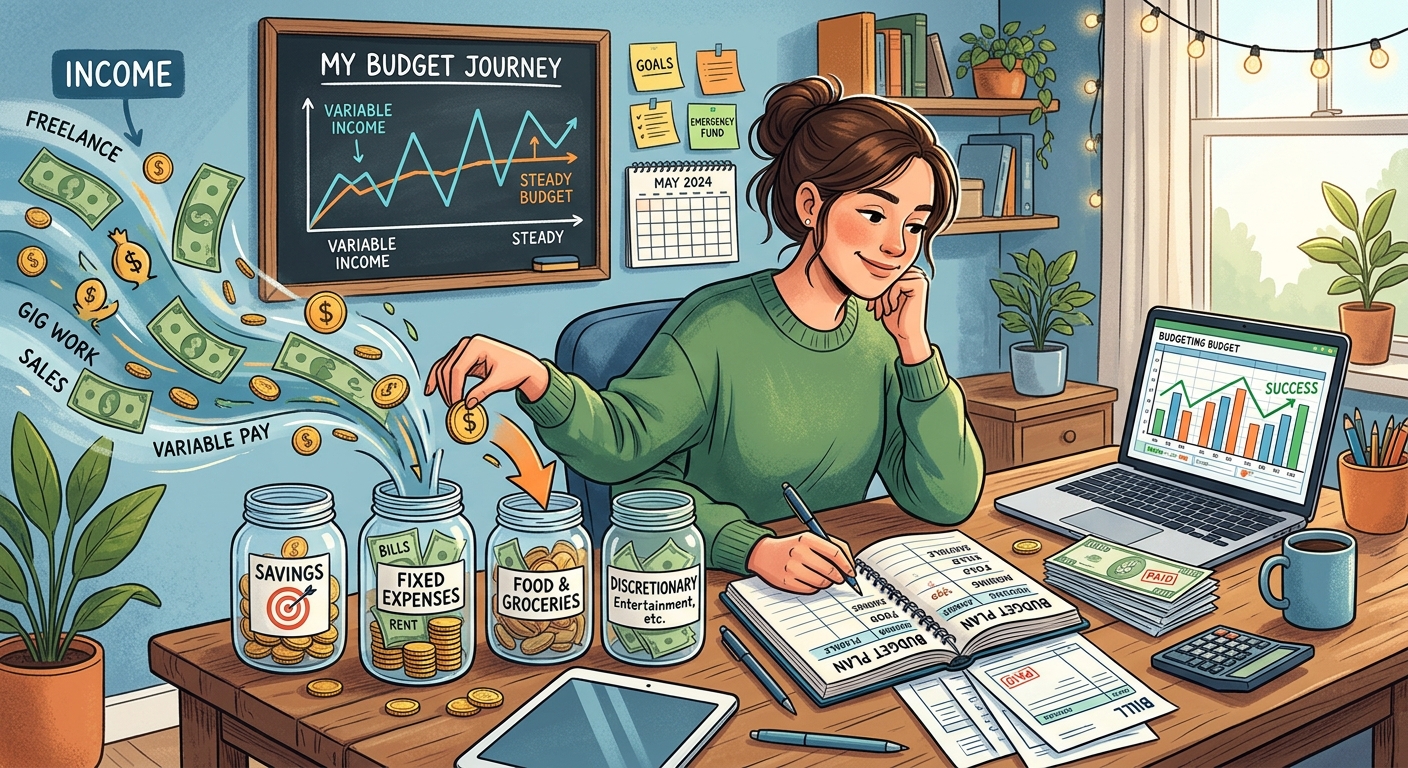
Rent arrives on schedule. Your paycheck might not. If you earn tips, work changing shifts, freelance, or depend on commissions, a strong month can make your finances feel comfortable. Then a slower month leaves you wondering which bills can wait. A useful budget gives those swings a place to land. Start with a conservative spending baseline, cover your essential bills first, and save part of stronger months to support the leaner ones.
Your Budget’s Starting Point
Build your monthly spending plan around income you can reasonably expect during a slower month. Give housing, food, utilities, transportation, and other necessary obligations the first claim on that money. Review your records to catch expenses that arrive less often. During stronger months, direct some extra income into a separate buffer. That reserve can cover planned shortfalls without making every quiet week feel like a financial emergency. Adjust the numbers as your circumstances change.
Choose an Income Baseline You Can Actually Use
Your best month is a tempting starting point. It can also leave you committed to spending that future paychecks cannot support. An annual average gives useful context, but it can hide several low months in a row.
Choose a cautious monthly income estimate based on your recent earnings and what you know about upcoming work. For an employee, use take-home pay after payroll deductions. For someone who is self-employed, subtract business expenses and reserve money for taxes before treating receipts as household spending money.
Suppose your available household income usually falls between $2,800 and $4,500. If $2,800 reflects a recurring slow month, it could be a sensible starting baseline. A single unusually bad month deserves attention, but it does not automatically have to set your permanent budget. Ask whether that low point could happen again and how you would cover it.
If you have just started earning variable income, use confirmed work and conservative estimates. Keep commitments modest while you gather a few months of records. Expected commissions and unpaid invoices belong in your forecast. Assign spending money after payment arrives.
Give Essential Bills the First Claim on Your Money
Next, calculate your minimum workable monthly spending. This is the amount your household needs to stay housed, fed, healthy, and able to earn income while meeting required obligations.
Use realistic amounts. A grocery limit that nobody in your household can follow will make the whole plan look better than it performs.
- Housing and basic utilities: Rent or mortgage payments, electricity, water, heating, and necessary phone or internet service.
- Food and health needs: Groceries, prescriptions, insurance premiums, and routine care you need to maintain.
- Costs that support work: Transportation, necessary vehicle expenses, childcare, and required work supplies.
- Required payments: Debt minimums, court-ordered payments, and other obligations that apply to your household.
These categories help you plan. They do not mean every payment carries the same consequence if missed. When money cannot cover everything, look closely at deadlines and the risks to housing, utilities, health, and your ability to work. Contact providers and creditors early about available arrangements.
Keep extra debt payments separate from required minimums. Paying down debt matters, but an aggressive payment that leaves you borrowing for groceries can undermine your progress.
Check Whether Your Baseline Covers Your Essentials
Imagine that your cautious income estimate is $2,800 and your essential monthly spending totals $2,650. That leaves $150 for other goals and flexible spending. The margin is narrow, but you have a clear starting point.
If essentials total $3,050 instead, you have a recurring $250 gap. A budget cannot erase that shortage. You may need lower fixed costs, additional dependable income, assistance, or revised payment arrangements. Identify the gap before deciding how much you can save or spend freely.
Review Past Income and Expenses Before Setting Limits
Once you have a rough baseline, test it against your records. Review at least several months of activity. A full year is useful if your work follows school terms, tourism, weather, or holiday demand.
Review bank statements alongside pay stubs and bills to identify recurring costs and seasonal patterns. Credit card records can fill in purchases that appear in your checking account only as one monthly payment. Count each expense once so you do not accidentally record both the purchase and its later card payment as separate spending.
For each month, note the household income you actually received, essential spending, flexible purchases, and occasional bills. Separate earnings from borrowed money, transfers between your own accounts, and other deposits that do not represent new income.
Look for patterns that explain the pressure. Your hours may drop each January. Summer childcare may cost more than you expect. A yearly insurance payment may keep landing during your slow season.
Turn predictable occasional expenses into monthly savings targets. A $600 annual bill requires $50 per month if you have a full year to prepare. If it is due in three months and you have nothing saved, the immediate target is $200 per month. The due date matters as much as the total.
Build a Bill Calendar Around Actual Payment Dates
A monthly budget can balance while your checking account still runs short halfway through the month. That happens when bills come due before income arrives.
The Consumer Financial Protection Bureau explains that tracking cash flow means watching the timing of income and expenses, an approach that can help people with irregular earnings. Put expected payment dates and bill deadlines on the same calendar to see where shortages may occur.
Use this routine whenever money arrives:
- Check your available balance. Account for pending transactions and money already reserved for bills.
- Identify the next dependable payment. Treat an uncertain client payment or possible shift as tentative.
- Fund essentials until that date. Include groceries, transportation, and bills due during the gap.
- Assign the remaining money. Cover occasional expenses, rebuild your buffer, and then fund flexible spending or additional goals.
If rent is due on the first and most earnings arrive later, reserve rent from the previous month’s receipts. You can also ask whether certain providers allow due-date changes. Confirm when any change takes effect before relying on it.
Build a Buffer That Can Carry a Slower Month
An income buffer is money you save to cover the gap between a lower-income month and your planned expenses. Using it for that purpose is part of the system.
Start with a target that feels reachable. Saving $100, then $250, then $500 can create breathing room while you work toward a larger reserve. Keep the money accessible and separate from everyday spending, perhaps in a dedicated savings account with suitable fees and transfer access.
Base your next target on an actual shortfall. If essential spending is $2,650 and a slow month may bring in $2,200, that month needs $450 from savings. Two similar months would require $900, assuming your costs stay the same.
That calculation gives your savings goal a purpose. Over time, you may aim to hold a full month of essential expenses. Seasonal workers may need enough to bridge several months, depending on the size and length of their usual income dip.
Separate Income Gaps From Other Savings Needs
A slow work month, a car repair, and an annual registration bill create different demands. Give each a place in your plan. Your income buffer covers earnings shortfalls. Emergency savings address unexpected costs. Money reserved for scheduled bills handles expenses you can see coming.
You do not need several bank accounts to do this. A simple spreadsheet or account labels can track the amounts. The goal is to avoid promising the same $500 to three different needs.
Decide Where Extra Income Goes Before It Arrives
A strong month offers a chance to make the next slow month easier. Decide on an order for extra money while you are calm, before a large deposit makes every purchase feel affordable.
- Catch up on urgent obligations. Address overdue essentials and any required business or tax reserves.
- Refill your income buffer. Replace money used during recent low-income periods.
- Fund upcoming expenses. Prepare for insurance, maintenance, school costs, and other known bills.
- Support longer-term goals. Put money toward additional debt repayment, retirement, or other savings priorities.
- Allow some enjoyment. Choose an affordable amount for spending that makes the plan easier to sustain.
For example, if you have $800 left after covering your planned expenses and required reserves, you might put $500 into your buffer, $200 toward an upcoming bill, and $100 toward personal spending. Those amounts are an illustration. Your overdue bills, savings balance, and upcoming needs should guide the split.
Be cautious about turning temporary extra earnings into recurring commitments. A subscription or larger vehicle payment keeps coming due after a busy season ends.
Adjust Early When Income Comes in Below Plan
Check your budget once a week and whenever a meaningful payment arrives. A brief review can reveal a canceled shift or late invoice before it becomes a missed bill.
If income falls short, pause optional purchases and extra debt payments. Check how much your buffer can cover. Then contact any provider whose payment may be affected. Ask about payment plans, hardship options, or fee relief, and confirm the terms before agreeing.
Pay attention to a buffer that shrinks month after month. It may mean your income baseline is too optimistic or your essential costs have risen. Repeated withdrawals without replenishment call for a revised plan.
If you share finances, agree on spending limits and buffer withdrawals. Both people need to know which money is available and which money already has a job.
Give Your Next Slow Month Some Breathing Room
You do not need identical paychecks to build a useful monthly budget. You need a cautious income estimate, an honest account of essential costs, and a routine for assigning money as it arrives.
Start with one month’s plan. Mark your bill dates, choose your baseline, and set a small buffer target. As stronger payments arrive, use them to support future expenses. With practice, a quieter month becomes something your household has prepared for, and your budget becomes easier to trust.