Home>Finance>What Happens To Your Credit Score After Bankruptcy
Finance
What Happens To Your Credit Score After Bankruptcy
Table of Contents
- Book your free credit score after bankruptcy consultation
- Check your starting score tonight before you file
- Mark your calendar for the 6-month, 1-year, and 2-year milestones
- Pull your full credit report and look for the public record flag
- Open a secured credit card with a $200 deposit the week your discharge arrives
- Frequently Asked Questions
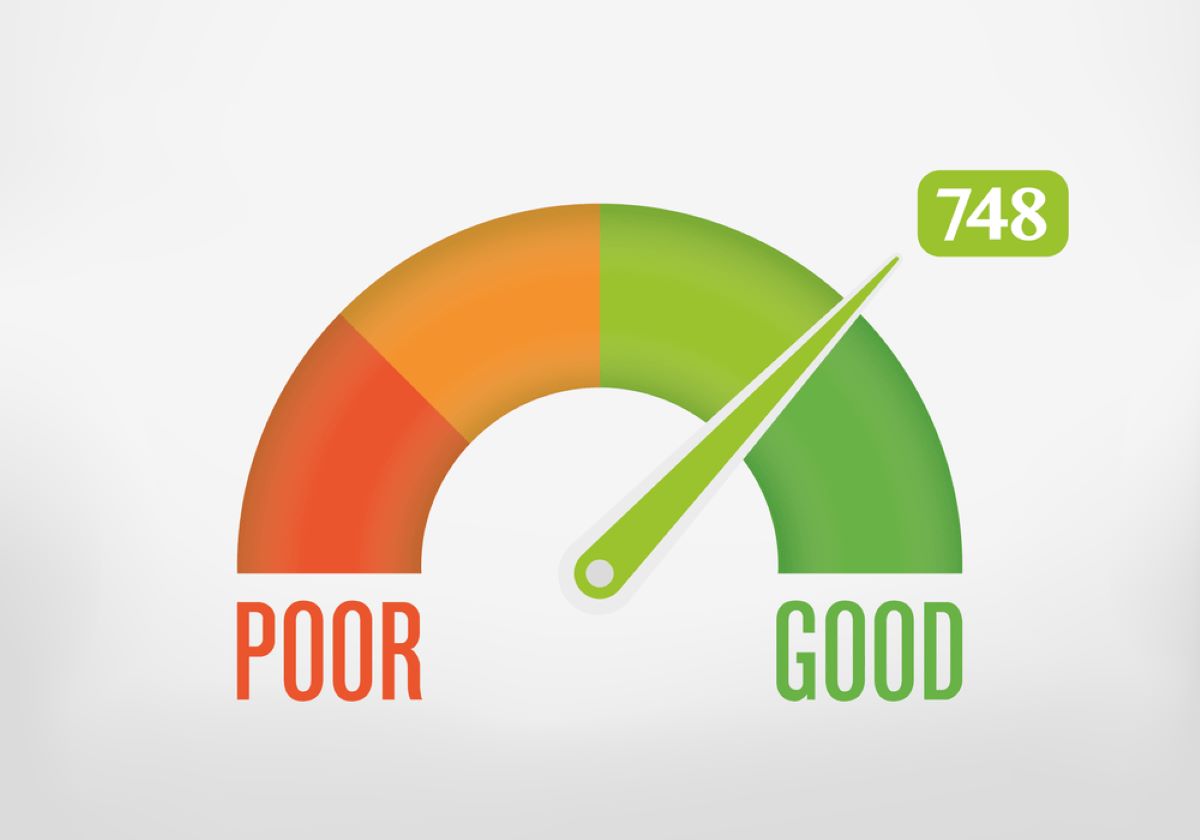
Your credit score drops significantly immediately after filing, often falling 130 to 200 points, but you can begin rebuilding it within months and qualify for a mortgage in as little as two years.
Book your free credit score after bankruptcy consultation
That initial plunge is brutal, but it is also temporary and, in a strange way, mechanical. The bankruptcy stays on your report for up to a decade, yet the score recovery curve is much faster than most people fear, provided you stop staring at the old number and start feeding the new one.
Check your starting score tonight before you file
The exact point decline depends entirely on where you started. If your score was already in the low 500s because you were missing payments before filing, the drop might only be 50 to 100 points, you had little left to lose. But if you were at 720 or higher, a Chapter 7 filing can knock you down 200 points or more. This feels counterintuitive, but it is how the math works: the scoring model punishes a clean history more severely when that history is suddenly wiped by a bankruptcy. The higher you were, the further you fall. A person with a 700 score might land near 500, while someone at 580 might only slide to 480. In both cases, you are in the same ugly neighborhood, which is the point. The system resets you to a baseline, and your old responsible payment history becomes irrelevant because the bankruptcy wipes it away.
Mark your calendar for the 6-month, 1-year, and 2-year milestones
Here is the timeline that nobody gives you. The bankruptcy stay on your credit report lasts 10 years for Chapter 7 and 7 years for Chapter 13. But the score recovery is not tied to that clock. At the 6-month mark, you will see your first meaningful movement, often 30 to 50 points, simply because the filing is no longer brand new. By the 1-year mark, most filers are in the 580 to 620 range, which is still subprime but no longer catastrophic. The 2-year milestone is the real turning point: your score typically crosses into the 640 to 680 zone, which is enough for an FHA mortgage with a 3.5% down payment. By the 3-year mark, many people are back in the 680 to 720 range, and by year 5, you are often indistinguishable from someone who never filed. The 10-year mark is only relevant for the most expensive credit (like a jumbo loan), not for everyday life.
Pull your full credit report and look for the public record flag
The failure case here is the person who obsesses over the number while ignoring the public record flag. That flag is a separate, manually visible entry on your credit file that says "BANKRUPTCY DISCHARGED" in plain text. When you apply for a car loan or an apartment, a human underwriter sees that flag even if your score is 680. They do not just look at the number; they look at the pattern. If you have a 680 score but the bankruptcy was 14 months ago, they will ask why you have no new credit activity. If you have no new accounts, they will assume you are still a risk. The score is a summary, but the public record is the story. You cannot rebuild one without addressing the other. A person who passes the score threshold but fails to open new credit will still get denied, because the manual review sees a thin file sitting next to a fresh bankruptcy.
Open a secured credit card with a $200 deposit the week your discharge arrives
Passive waiting is the single biggest mistake you can make. The score will not recover on its own, it recovers because you add new positive data. The fastest mover is a secured credit card with a $200 deposit, used for one small recurring payment (like Netflix) and paid in full every month. After 6 months, that card alone can add 40 to 60 points. At the 1-year mark, add a credit-builder loan or a small installment loan from a credit union, $500 to $1,000 paid back over 12 months. This shows the model you can handle mix. At the 18-month mark, you can often get a standard (unsecured) card with a $1,000 limit, which further boosts your utilization ratio. The key is to never carry a balance above 10% of your limit and to never miss a payment. By the 2-year mark, you want to have at least three active accounts: one revolving (credit card), one installment (auto loan or personal loan), and one older trade line (like a store card). That mix, not the passage of time, is what pushes you into mortgage territory.
Frequently Asked Questions
Skip the same-year car loan and wait until month 12
Yes, but expect a predatory rate. Subprime lenders will approve you within 6 to 9 months, but at 18% to 25% APR. The better play is to wait until the 12-month mark, put down 20% or more, and refinance after 12 months of on-time payments.
Choose Chapter 13 if you want a faster score recovery
Yes. Chapter 13 stays for 7 years instead of 10, but it also requires you to repay a portion of your debts. During the 3-to-5-year repayment plan, your score can actually rise faster because you are demonstrating consistent, on-time payments to the trustee.
File alone if the debt is only in your name
No, if the debt is solely in your name. But if you live in a community property state (like California or Texas), the bankruptcy can appear on your spouse's report if they are added as a co-debtor. A joint filing is often cleaner if you share assets.
Bring a letter of explanation and recent pay stubs to every apartment showing
Yes, but you will need to pay a higher security deposit, typically one to two months extra. Landlords run a manual review, so be upfront and show recent pay stubs. A written letter explaining the circumstances, plus proof of a stable income, often wins them over.
Review your creditor list twice before you submit and amend immediately if you miss one
That debt is not automatically discharged. You must amend your filing to include it, which requires a court motion. Doing this late can delay your discharge, so review your creditor list twice before you submit. Before you file, study exactly what debts are not discharged in bankruptcy so nothing surprises you later.
The distinctive claim of this guide is that your credit score after bankruptcy recovers not by waiting out the 10-year clock but by deliberately stacking three specific account types by the 2-year mark, a timeline and account mix no generic credit-repair page will give you.