Home>Loans & Debt>Loan Basics

Loans & Debt
Loan Basics
Table of Contents
- Loan basics fundamentals and key terms
- Types of loans and when to use them
- Specialized and government-backed home loans
- Secured and collateral-based borrowing
- Low-doc and non-traditional verification loans
- Getting a loan with bad credit
- Business loans and finding capital
- Loans from specific banks and credit unions
- Student and parent education loans
- Tax-time and seasonal loan offers
- Online lender timelines and processes
- Government employee and military loan programs
- Renovation and homestyle mortgage options
- Accounting, balance sheets, and fiscal timing
- Using loans for investing and arbitrage
Loan basics fundamentals and key terms
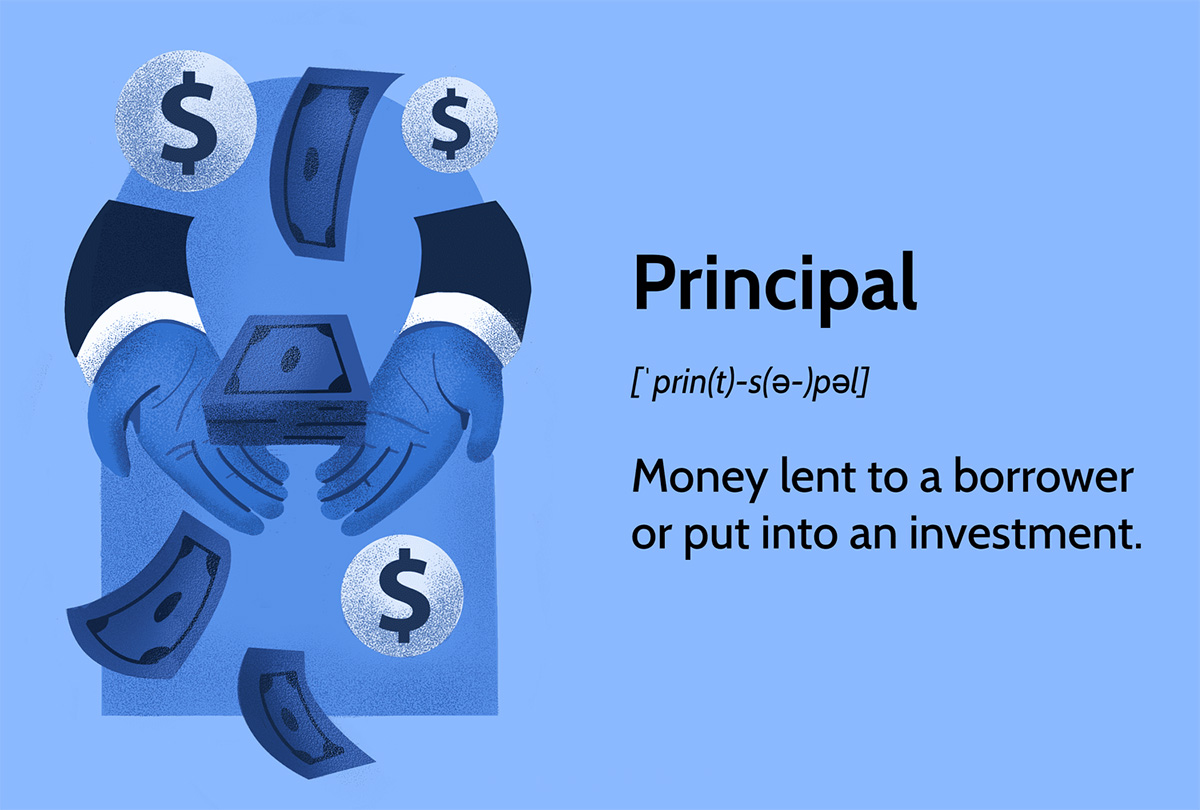
Before you sign any paperwork, it helps to get comfortable with the loan basics that shape every agreement, starting with repayment, which is simply the schedule and method by which you return the borrowed money, usually via fixed monthly installments that chip away at both principal and finance charges over a set term; you will want to read the article on repayment to understand how different loan structures affect your monthly obligations. The person who guides you along the application path, verifies your financial details, and structures the offer is your loan officer, a professional whose compensation may depend on the terms you close; reading about the loan officer role will help you know what to expect from this key contact. For short-term consumer loans, some financing companies still apply a quirky interest-allocation method called the rule of 78, which front-loads the finance charges you owe so that early installments are mostly charges and very little principal. The IRS defines a qualifying loan for this method as a self-amortizing loan with level payments at least annually, over no more than five years, with no balloon payment, and the loan agreement must explicitly state that charges are earned using the rule of 78’s method. That approach is no longer acceptable for federal income tax purposes, but you may still encounter it in certain financing contracts, so it is worth recognizing the term.
- collateral - definition and examples - Collateral - Definition And Examples
Types of loans and when to use them
When you need capital for a company rather than a personal expense, credit providers assess the transaction differently. A commercial and industrial (C&I) loan is designed for operating costs like buying inventory, covering payroll, or purchasing machinery. It is typically secured by the enterprise’s assets rather than real estate. If you are buying a warehouse, an office, or a multi-unit apartment building, you instead need a commercial real estate (CRE) loan definition, types, terms, rates all center on property that generates income or houses your operations. Underwriting for these relies heavily on the building’s cash flow.
Some commercial financing comes with a bullet loan structure. You make smaller installments, or even interest-only installments, during the term. Then you repay the entire remaining principal in one large sum at the end. That contrasts sharply with a self-amortizing loan definition: each installment fully pays down the balance over time. Nothing is left owing after the final scheduled remittance. If your credit or collateral is not strong enough for a conventional bank offer, a guaranteed loan can help bridge the gap. A government agency or third party promises to cover the financing source’s losses if you default. In situations where traditional financing is not an option because of foreclosure timelines or a distressed property, investors often turn to a hard loan definition. This is an asset-based bridge facility from private capital providers that prioritizes the property’s value over your credit score.
Pricing structures vary widely by institution and market conditions. Fees and minimum deposit requirements for secured cards are set by the issuing bank. Check the institution’s current fee schedule for the exact figure. Origination charges on certain installment products are published by the provider. Credit line limits are established by the underwriting firm. Always confirm the latest numbers directly with the official source, as terms change.
Specialized and government-backed home loans
In every case, the mechanism that amplifies gains also sharpens losses, and the financing behind these strategies is nothing like the easy credit of two decades ago. Understanding how a savings secured loan works matters because your monthly installments restore access to the frozen funds again, turning your disciplined saving into a credit reference without derailing your progress.
When you move beyond conventional mortgages, you quickly encounter programs with their own rulebooks, and knowing those rules before you make an offer can save a deal. A common frustration in a competitive market is that sellers often push back against government-backed offers, and it is worth understanding why don't sellers like fha loans: a property resold 90 days or fewer after the seller's acquisition is not eligible for an FHA-insured mortgage, and between 91 and 180 days a second appraisal kicks in if the price is 100 percent or more above the seller's purchase price, while any seller-paid closing contribution above 6 percent of the price directly reduces the insurable loan amount dollar for dollar.
On the data-reporting side, what loans are covered by hmda generally includes both closed-end mortgages and open-end lines of credit unless the transaction is specifically excluded, and most home-purchase financing lands in the dataset that regulators use to watch for fair-lending patterns.
In the non-traditional space, what loans are exempt from atr rule and a definition of non-qm loans are not available. These almost always demand a larger down payment and top-tier credit.
When you apply for a fresh VA-guaranteed loan instead, the max dti for va loans uses a 41 percent benchmark rather than a hard ceiling, and underwriters can go higher when strong residual income or other compensating factors are present.
Secured credit cards and credit-builder installment contracts offer two distinct paths to establishing a record of reliability. The card requires a cash deposit that the issuing bank holds as collateral, and that deposit typically sets the spending limit. The installment contract works in reverse: the bank places the loan proceeds into a restricted account, and you gain access to the money only after you complete the scheduled installments. Both products report your activity to the major credit bureaus, which is the entire point.
Pricing on these entry-level products varies widely by institution and by the applicant's existing profile.
Credit-builder installment contracts come with their own cost structure. The annual percentage rate on these contracts can range from roughly 5 percent to 16 percent, set by the lending institution, and the precise rate on any given day is available on the provider's published rate sheet. Some credit unions also charge a modest administrative fee, and you should check their fee schedule for the latest figure.
The monthly installment on a credit-builder contract is a fixed obligation that the institution reports each cycle. Missing a due date defeats the purpose, because a late mark on a fledgling credit file can set you back more than a year of on-time installments can advance you, so treat the installment like a utility bill and automate it if the servicing platform allows.
Secured cards require similar discipline with an added layer of ongoing management. The utilization ratio, which measures the balance you carry against the credit limit, carries significant weight in most scoring models, and keeping the reported balance below 10 percent of the limit and paying it in full each month sends the strongest signal to the algorithms. Letting a small balance report before you pay it off is fine, but carrying a balance from one cycle to the next triggers interest charges that can be steep on these products.
Not every secured card graduates to an unsecured product, and the timeline for graduation depends entirely on the issuer's internal policy. Some banks review accounts after six months of responsible use, while others keep the account secured indefinitely, so calling the issuer's customer service line and asking about a graduation path before you apply can save you from getting stuck with a product that never grows with you.
The credit-builder installment contract has a natural endpoint: once you finish the final installment, the bank releases the restricted funds, and you walk away with a lump sum and a completed installment trade line on your reports. That closed account continues to contribute to your credit history for up to a decade, giving you a durable foundation while you move on to other credit products.
Small-dollar lending outside the traditional banking system operates under a different set of economics, and the annualized cost can be jarring if you only look at the fee in isolation.
Title loans, which use a vehicle as collateral, carry a different risk profile because the lender can repossess the asset if you default. Losing a car over a relatively small sum is a real outcome, and it happens more often than the marketing materials suggest.
Pawn shop advances are the most self-contained of the high-cost options: you hand over an item, the shopkeeper assesses its resale value, and you walk out with cash.
Secured and collateral-based borrowing
When a lender asks you to pledge an asset instead of relying solely on your income, the conversation shifts from what you earn to what you already own. One of the most straightforward structures is a loan backed by cash collateral, where you deposit funds into a dedicated account and borrow against them, which can help rebuild credit or cover a short-term need without liquidating your investments. Understanding how does a savings secured loan work matters because your monthly installments restore access to the frozen funds, turning your disciplined saving into a credit reference. If you would rather not touch your savings at all, you can instead research what banks offer CD-secured loans at terms that match the certificate’s maturity, letting you earn a return on the deposit while borrowing at a lower rate than an unsecured line would carry.
Real estate opens a different set of options. Before you start clearing a lot, you will need to verify who does land equity loans in your area, since many conventional institutions shy away from raw acreage and you may need a farm-credit organization or a local portfolio financier that understands the parcel’s zoning and access. For property owners buying a new home before selling their current one, the search for a firm that offers bridge loans becomes urgent, as these short-term facilities let you tap the equity in your departing house to cover the down payment on the next, though they typically require strong credit and a clear exit plan. In every one of these secured arrangements, the financier’s comfort comes from the asset you pledge, and the amplifying force that magnifies gains also sharpens losses. This is why such options remain available even when stated-income programs have narrowed to a niche for well-qualified buyers.
Low-doc and non-traditional verification loans
When standard tax returns and pay stubs are not an option, the conversation shifts toward what you own rather than what you earn. The strict no-income-verification loans of the past are gone. A low/no documentation loan definition requires minimal income verification. If you are hunting for what banks do no doc loans, you will find that most large institutions no longer offer them. Instead, the path often leads to private funding sources or specialized portfolio programs that keep the debt on their own books. How portfolio loans work is not covered here. Because the institution does not sell the mortgage to investors, it can set its own underwriting rules and accept alternative proof of repayment ability. A balance sheet loan may be part of self-employment income verification. It lets a bank weigh your total financial picture, including pledged securities or enterprise assets, rather than rejecting you for a missing W-2. For real estate investors, the question of what banks do dscr loans opens a different door. That is why they have become a go-to for building a rental portfolio without standard income proof.
Getting a loan with bad credit
When your credit history is thin or damaged, the first step is often to separate loans that check your credit from those that do not. If you need to get a $5000 loan with bad credit, federal student aid offers a path that bypasses credit checks for certain loan types. Filing the FAFSA unlocks Direct Unsubsidized Loans that do not require a credit check or a cosigner. That makes them a realistic building block before you consider private options, and it also helps you understand whether "can i borrow $1000 with bad credit" is a question you can answer with a similar no-credit-check approach.
Those products are designed for members with weak credit.
Nursing students face the same hurdle, and the most reliable loans for nursing school when credit is bad remain the Direct Subsidized and Unsubsidized Loans accessed via the FAFSA. Only the PLUS loan program triggers a credit review that can be overridden with an endorser. When you look outside federal programs, you will encounter services like Red Arrow Loans, which describes itself as a lender-matching service. One short form prompts financing companies to contact you.
Business loans and finding capital
Finding the right capital often starts with where you stand today.
- get a small business loan with bad credit and no collateral - How To Get A Small Business Loan With Bad Credit And No Collateral
- apply for a small business loan in texas - How To Apply For A Small Business Loan In Texas
- apply for a va small business loan - How To Apply For A VA Small Business Loan?
- get a first-time business loan - How To Get A First-Time Business Loan?
- find business loan leads - How To Find Business Loan Leads
Loans from specific banks and credit unions
When you compare what kind of loans does Chase offer to what a specialized credit union provides, the contrast sharpens quickly. Chase concentrates on auto loans and leases, mortgages and home equity lines, and a digital borrowing feature called My Chase Loan that lets you tap your existing credit card’s available credit with a minimum. You can manage everything via the Chase Mobile app, which works well if you already bank there but leaves commercial operators looking elsewhere.
If you need to get a business loan from Navy Federal, your enterprise must be a business member before you apply. You sign into the secure portal using your personal Navy Federal credentials to begin a line of credit application, though multi-owner firms must print, hand-sign, and scan the forms because digital signatures are not accepted. The product range stretches from vehicle financing to commercial real estate, giving you more runway than a personal credit-card-linked loan.
The idea that you can buy loans from banks often surfaces among investors hunting for discounted notes, but that is not a standard consumer process at the institutions covered here. The closest retail feature is Chase’s My Chase Loan, which is not a purchased loan at all but a way to borrow against credit you have already earned.
Student and parent education loans
Federal borrowing shifts when you move beyond your own undergraduate degree, and the rules change in ways that catch families off guard. 21, 2012, and Dec. 31, 2014, may already fall under an approved group discharge without needing to file again. For graduate students, timing matters less than mechanics, so it is worth knowing do grad plus loans get disbursed directly to your school account first, which is why you would want the article that clarifies the disbursement schedule and what to expect, with any remaining balance after tuition and fees coming back to you for other education costs. Parent borrowers face a different risk entirely, so it is worth knowing what happens to parent plus loans if parent dies, which is why you would want the article that details the discharge process and required documentation: the loan is discharged, but a family member must send the servicer an original or certified death certificate to trigger it.
Pricing carries an expiration date, so treat every figure as a snapshot. The typical secured card deposit falls in a band the issuing bank sets and adjusts, while the origination fee on a federal undergraduate loan is published each October by the Department of Education. A short-term credit-builder installment account often requires a deposit the credit union or community bank defines, and the standard federal loan origination fee for graduate borrowers is fixed annually in a Federal Register notice.
The enterprise of lending shifts shape depending on who holds the paper. A traditional banking institution prices its products one way, while an online financing platform uses a different model. A credit union operates as a member-owned cooperative, and a nonprofit community development fund serves a distinct mission. The firm backing your auto note may be a captive finance company owned by the manufacturer, while a merchant’s point-of-sale installment provider is yet another type of operation. Your mortgage servicer might be a specialty shop that handles nothing else, and the entity that underwrites a small commercial equipment lease often focuses on a single industry. A peer-to-peer marketplace connects individual backers with borrowers directly, while the company that buys retail installment contracts from a contractor is a third-party financing house. A microlender working in underserved neighborhoods runs on a completely different scale, and the organization that administers a federal student aid portfolio answers to a different set of rules. A payroll-advance provider ties repayment to your wage cycle, the venture that supplies invoice factoring to freelancers advances cash against future receivables, and a hard-money shop lends against real estate equity with a speed that banks cannot match.
The cost of borrowing wears many labels. The annual percentage rate bundles the base charge with most fees into a single figure, while the note rate is the simple periodic charge on your principal balance. A subscription-based lender quotes a flat monthly membership fee instead of a running balance charge, and the yield on a bond fund reflects what the underlying issuers pay. The finance charge on a revolving account is what you pay for the privilege of carrying a balance, the coupon on a fixed-income security is the scheduled payout to the holder, and the factor rate on a merchant cash advance multiplies your borrowed sum to set the total repayment. The discount rate on a Treasury bill is the difference between what you pay and what you get back at maturity, and the annual equivalent rate lets you compare accounts that compound with different frequency.
The obligation you send in each month goes by several names. Your scheduled remittance is the minimum needed to stay current, while an installment is a fixed sum that chips away at the balance over a set term. A transfer from your checking account to the servicer is what keeps the account in good standing, and an electronic funds withdrawal authorized on the due date is the most common method. A coupon mailed with a check is still an option at some smaller credit unions, and the amount drafted automatically each cycle is your autopay debit.
You deposit cash with a credit union, and it issues a certificate of deposit in your name. The institution then places a hold on those funds and extends a loan of the same amount to you, with each on-time remittance getting reported to at least one major consumer reporting agency. The frozen deposit becomes available again as you pay down the principal, and by the final installment, your savings are fully liquid and your file shows a completed obligation. This structure works because the institution takes almost no risk, so approval is nearly certain even with a thin or damaged file.
The true expense is not the rate on the note, because you earn a yield on the locked deposit while the loan carries a finance charge, and the gap between what you pay and what you earn is the net cost. Some credit unions structure the product so the earned yield nearly offsets the finance charge, while others charge an origination fee that widens the gap. Ask for a disclosure that shows both sides of the transaction before you commit, since the total net expense over a twelve-month term is the gap between what you pay and what you earn on the deposit.
Community development credit unions frequently design these products for members who need a first or second chance, while online fintech platforms offer them with a mobile-first experience and faster setup, and some large national banks have quietly added them to their suite of savings products. Compare the annual percentage rate on the loan, the yield on the deposit, and any origination or annual fees, because the most favorable terms usually come from a nonprofit cooperative that views the product as a member service rather
- what happens to parent plus loans if parent dies - What Happens To Parent Plus Loans If Parent Dies?
- I get my university of phoenix loans discharged - How Do I Get My University Of Phoenix Loans Discharged?
- do grad plus loans get disbursed - When Do Grad Plus Loans Get Disbursed?
Tax-time and seasonal loan offers
When tax preparers promote holiday-season advances, the offers sound like quick cash, but the terms are tied to your anticipated refund and the preparer’s own underwriting, not the loose stated-income programs of the past. If you are wondering whether does H&R Block start holiday loans early enough to cover December expenses, their Emerald Advance Loan opens applications at participating locations for a limited seasonal window, with a documented loan amount range and no monthly remittance required until the following spring. The timeline shifts if you ask does jackson hewitt do holiday loans later in the season, as their Early Tax Refund Advance loan begins in December, and one version of the offer runs through January, with approved sums reaching up to a certain amount and the money landing on a prepaid card in minutes. Both products require you to apply in person at a physical office, and approval hinges on your expected refund size and tax history.
Online lender timelines and processes
When you apply through a fintech platform, the speed from approval to deposit depends on when you accept the offer and which institution ultimately backs the loan. If you are trying to pin down how long do upstart loans take to deposit, the standard window is tight. Accept your terms before 5 p.m. Eastern on a weekday, and Upstart typically transfers the funds the next working day. Accept after that cutoff, on a weekend, or on a holiday, and the transfer shifts to the following working day. Their funding sources often target an 11:50 a.m. ET deadline for same-day initiation. The final moment the money lands in your account still hinges on your own bank’s processing speed. That can stretch the total to one to three working days after you sign the agreement. One wrinkle to watch for is purpose. Education-related loans carry a mandatory three-working-day waiting period after acceptance before funds are released. An auto refinance loan sends a paper check to the prior lienholder, a process that usually takes seven to ten working days. The current deposit timeline for Prosper is less fixed in publicly available documentation. Review your specific offer’s disclosures carefully before counting on a particular funding date. Neither platform operates on the old stated-income model. Both require full documentation and strong credit. The speed of their automated underwriting is what makes the quick turnaround possible.
- do upstart loans take to deposit - How Long Do Upstart Loans Take To Deposit?
- do prosper loans take - How Long Do Prosper Loans Take?
Government employee and military loan programs
Federal employees and service members have access to borrowing options that do not look like the old stated-income products from before 2008, and the rules are tighter than most people expect. If you are weighing a Thrift Savings Plan loan, the first thing to check is how many tsp loans can you have at one time: the per-account limit is two, and only one may be a primary residence loan. You could hold one general purpose loan and one residence loan, or two general purpose loans, but never two residence loans at once. That means the math is less forgiving than a simple percentage of your balance. Always confirm the current dollar bands on the TSP website, because the plan administrator adjusts the thresholds periodically.
For veterans and active-duty buyers looking at fixer-uppers, it helps to know who offers va rehab loans before you assume any VA lender can handle renovation financing. The program is not a standard offering across every VA-approved institution. You may need to work with a specialist that supports both the VA guarantee and the rehab component rather than expecting the first loan officer you call to quote it. On the protection side, the SCRA interest-rate cap of 6% applies to pre-service debts incurred by the servicemember or jointly with a spouse. The scra treat co-borrowers on servicemembers loans in a way that often surprises people: dependent co-borrowers on most pre-service loans are also covered. The creditor must forgive interest above the cap retroactively rather than simply lowering the rate going forward.
Your disciplined saving turns into a credit reference, and the cycle repeats as you rebuild the available balance. The pricing on these facilities is not static. Check the institution’s current fee schedule before you commit, since those figures are set by each provider and change over time.
In every case, the mechanism that amplifies gains also sharpens losses. Margin calls arrive faster, collateral requirements are stricter, and the cost of funds resets on timetables that can punish anyone who treats the arrangement as permanent capital. A small firm or sole proprietor weighing a line of credit should compare the stated annual percentage rate with the effective cost after fees. Those thresholds are facts with an expiry date, and the only reliable source is the issuer’s own disclosure.
Managing a commercial enterprise through a borrowing cycle requires more than watching the prime rate. The venture’s cash-flow cycle dictates whether a short-term note or a revolving facility makes sense. An owner with a seasonal operation often finds that a merchant cash advance creates a repayment burden that outpaces revenue, while a term note from a community development financial institution spreads the obligation across a full year. The enterprise’s industry also shapes the underwriting. A retail shop faces different working-capital pressures than a consulting practice, and the credit provider will weigh inventory turnover differently from accounts receivable. Separating the owner’s personal credit from the firm’s profile becomes essential once the operation grows beyond a sole proprietorship. The entity’s own tax returns and bank statements carry more weight than the founder’s FICO score at that stage, and the financing partner will ask for a business plan that shows how borrowed funds convert into sustainable margin.
Choosing the right funding partner matters as much as the rate. A traditional bank offers the lowest cost of capital but demands the strongest financials and the longest lead time. An online alternative moves faster and tolerates thinner files, yet the pricing reflects that speed. A credit union often sits between the two, blending relationship-based underwriting with a nonprofit charter that can bend the cost of borrowing downward. The enterprise’s stage of life should guide the choice. A startup with no revenue history will rarely qualify for a conventional bank line, while a mature firm with audited statements leaves money on the table if it defaults to a high-cost online product. Comparing term sheets side by side reveals differences beyond the headline rate, including prepayment penalties, personal guarantee requirements, and covenant packages that restrict future borrowing.
The tax treatment of borrowed capital creates another layer of planning. Interest on a term note used for operating expenses is generally deductible as an ordinary cost of doing business, but the rules tighten when the funds finance owner draws or personal assets. The Internal Revenue Service separates the use of proceeds from the source, so a mixed-purpose loan requires careful allocation. A tax professional can help trace the funds and document the split before filing season arrives. The same principle applies to a home-equity line used partly for a rental property upgrade and partly for a family vacation: only the portion directed at the investment property generates a deduction. Keeping a separate account for borrowed funds simplifies the paper trail and reduces the risk of an auditor reclassifying the interest.
Building a credit profile for a young enterprise takes time and a deliberate sequence of steps. The first move is obtaining a federal employer identification number and opening a dedicated bank account in the entity’s name. The second is establishing trade lines with suppliers that report to the major commercial credit bureaus. A net-30 account with an office supply vendor or a wholesale distributor creates a data point that the scoring models can use. The third step is applying for a small revolving account with a provider that reports to Dun and Bradstreet, Experian Commercial, or Equifax Small Business. Using that account lightly and paying it in full each cycle builds a score that eventually unlocks larger facilities. The process cannot be rushed, because the algorithms weight the age of the oldest trade line and the average age of all accounts. A six-month-old file with one trade line looks very different from a three-year-old file with five.
Separating personal and commercial finances protects both the owner and the operation. A sole proprietor who runs everything through a personal checking account creates a tangle that an underwriter cannot decipher. The lender sees a blur of grocery purchases, client deposits, and utility bills with no clear picture of the firm’s actual cash flow. The fix is simple: open a dedicated business checking account and route every
Renovation and homestyle mortgage options
If your house needs work before you can move in or refinance, you may want to look for a lender that offers fannie mae homestyle loans, because these products let you roll repair costs into the mortgage instead of taking out a separate loan. The program actually splits into two paths. HomeStyle Refresh is open to all Fannie Mae-approved lenders with no special approval required, while HomeStyle Renovation requires the lender to be an approved Seller/Servicer and obtain special approval to deliver the loan before the contractor finishes the job. That distinction matters because renovation work must be completed no later than 15 months from closing, and lenders who fund upfront take on limited recourse. If you default and the default continues for at least 120 days before completion, the lender could be forced to repurchase the loan.
You will also run into tighter loan-to-value limits than you might expect on a standard mortgage. A principal residence, 1 unit, purchase can reach 97% LTV with a fixed-rate loan, while an investment property, 1 unit, purchase caps at 85%, and a limited cash-out refinance on that same investment property drops to 75%. Lenders who handle renovation escrow in-house typically pursue standard approval, and those who outsource the operational side to a third-party vendor go through conditional approval. Either way, you are dealing with fully documented, credit-sensitive financing, nothing like the old stated-income loans that vanished after 2008.
Accounting, balance sheets, and fiscal timing
When a lender structures a loan, the accounting treatment flows directly into the financial statements you or your investors review. For long-term assets like equipment or property, the gradual write-down of the loan’s capitalized costs appears as a contra asset, so when you ask does accumulated amortization go on the balance sheet, the answer is yes, it is typically reported directly beneath or netted against the related long-term asset so the net book value is shown. This matters at year-end because the choice of reporting date shapes when that amortization expense closes for the period. Understanding fiscal year-end? definition and vs. calendar-year end helps here: a fiscal year-end is simply the last day of a 12-month accounting cycle, and unlike the calendar year-end fixed at December 31, a company can set it to align with a slower operational season, shifting when loan-related expenses and income hit the books. On the income side, a loan’s classification can override the normal accrual rhythm. Once a credit deteriorates to the point that full repayment of principal or interest is no longer expected, or it has been in default for 90 days or more without being both well secured and in the process of collection, the bank must treat it as a nonaccrual loan. At that point, the institution stops accruing interest income and reverses any uncollected interest already booked, directly shrinking the earnings you see on the income statement for that reporting period.
- does accumulated amortization go on the balance sheet - Where Does Accumulated Amortization Go On The Balance Sheet
- fiscal year-end? definition and vs. calendar-year end - What Is Fiscal Year-End? Definition And Vs. Calendar-Year End
- nonaccrual loan - Nonaccrual Loan: Definition, FDIC Criteria, Ways To Fix
Using loans for investing and arbitrage
Borrowing to invest sounds straightforward on paper, capture a spread between your loan rate and a higher expected return, but the mechanics get complicated fast. The same caution applies when you are pooling capital, and putting money into a blended fund investment means your loan proceeds are riding on a mix of asset classes and strategies.
The desire to use loans to make money often leads people toward structures that feel clever but carry hidden linkage risk, which is why you would want to read the article on that topic to avoid common pitfalls and learn how to deploy borrowed capital safely. If one leg of that arrangement fails, you are typically still on the hook for the other, and unwinding the chain can trap capital when you most need it.
- cost to borrow mean in stocks - What Does Cost To Borrow Mean In Stocks
- use loans to make money - How To Use Loans To Make Money?
- back-to-back loan - Back-to-Back Loan: Definition, Purpose, And Examples