Taxes
Federal Filing Fundamentals
Table of Contents
- Before you start: federal tax filing return types and core concepts
- Filing responsibility and deadlines
- Filing status and signing authority
- Locating key identifiers and access codes
- Finding income and deduction figures on your return
- Reporting retirement account activity
- Entering investment, dividend, and royalty income
- Handling 1099 forms for miscellaneous and specific income
- Reporting self-employment and solo 401(k) activity
- Handling settlement, cash in lieu, and foreign income
- Special entity and payroll tax returns
- Filing and mailing information returns to the IRS
- Amending and canceling a return
- Accessing, printing, and downloading your return
- Supplementary forms and statements
Before you start: federal tax filing return types and core concepts
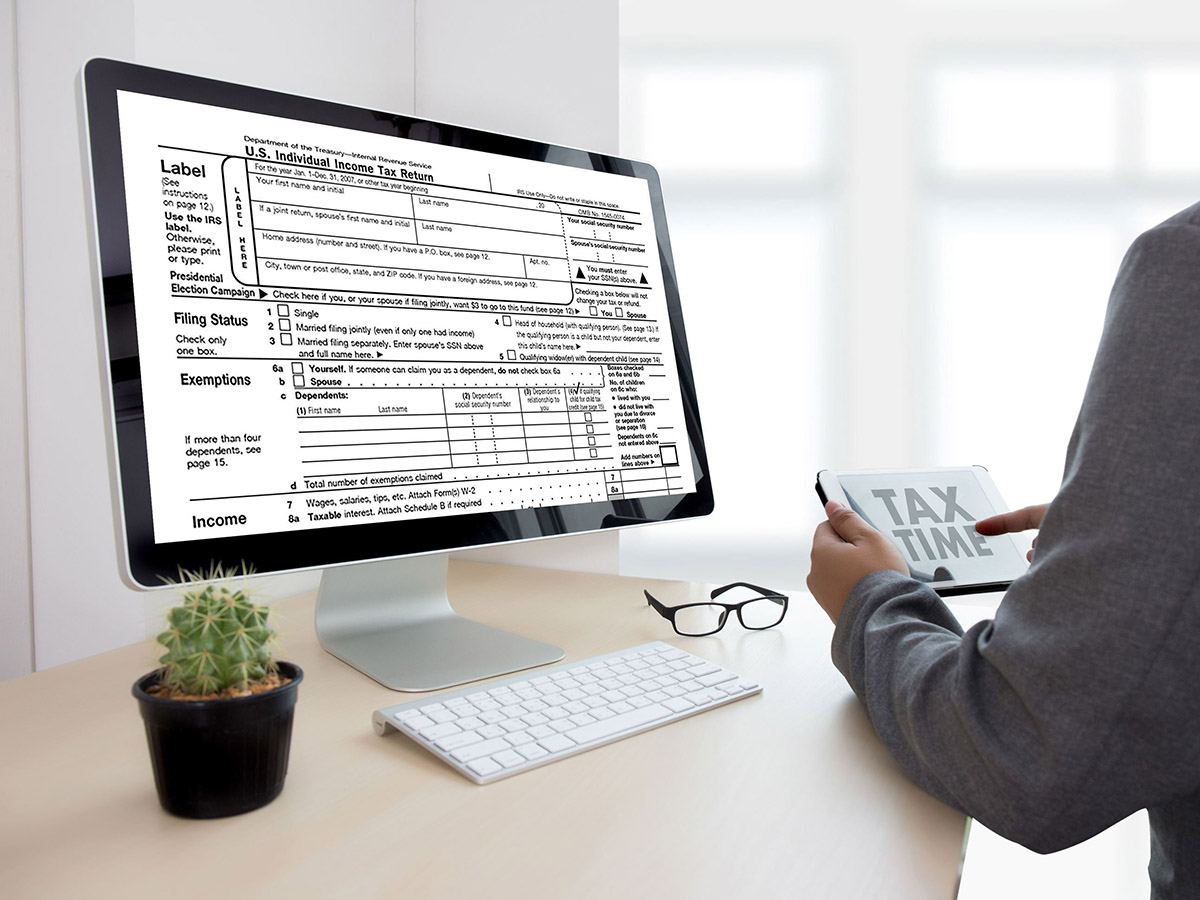
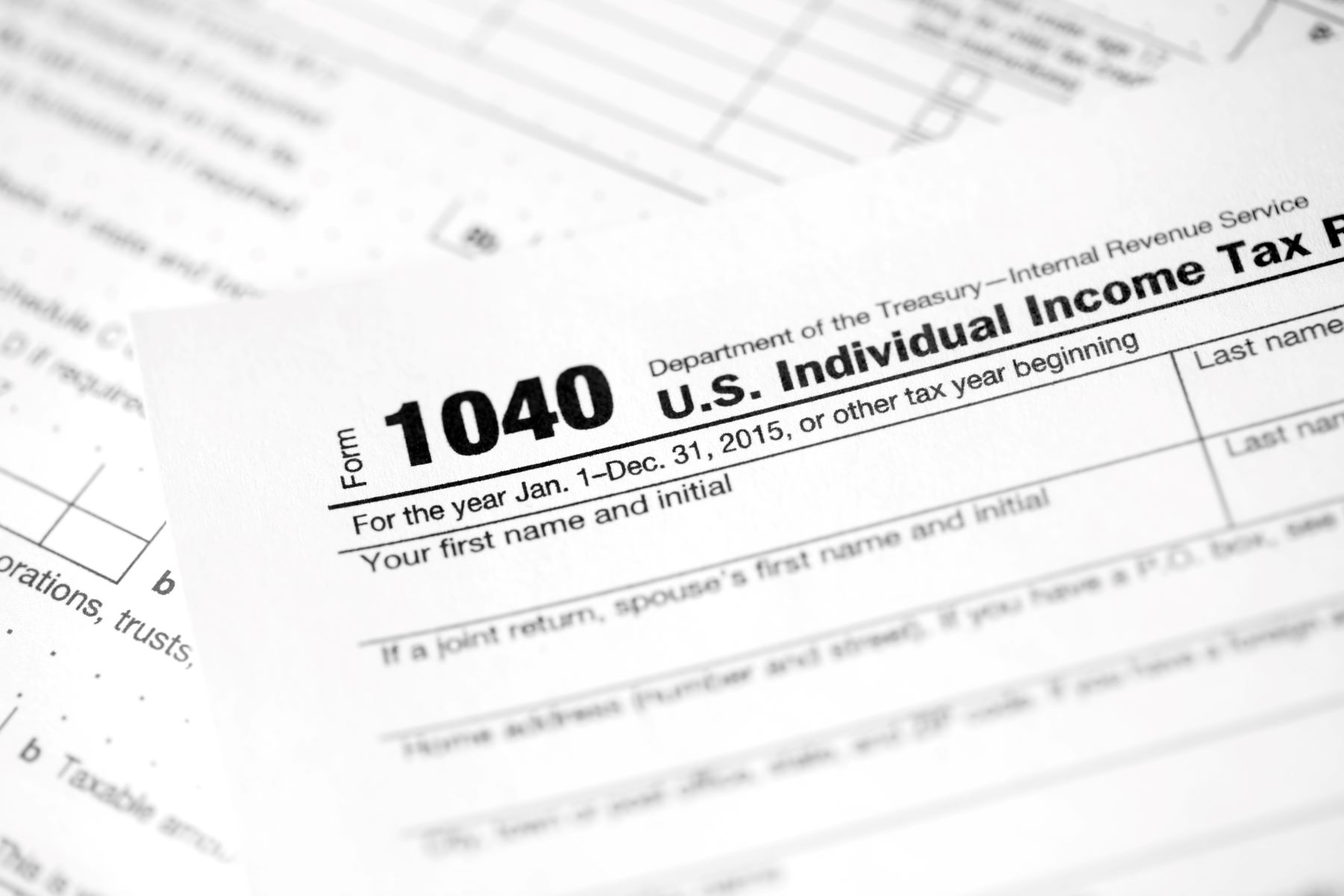
Before you put a single number on paper, it helps to know which federal tax filing applies to your situation. Most people recognize form 1040 as the U.S. Individual Income Tax Return. But responsibilities can extend well beyond that. If you are managing a decedent’s estate, trust, or bankruptcy estate, you may need to file a fiduciary income tax return on Form 1041, and understanding this document is essential because it reports the entity’s earnings, deductions, and tax liability in a way that protects beneficiaries and executors alike. Separately, transferring significant assets during your lifetime might require filing Form 709. Understanding the gift tax return definition means recognizing that this is the same United States Gift (and Generation-Skipping Transfer) Tax Return the IRS now requires for all such transfers.
The tax system also includes obligations that have nothing to do with earnings. Businesses owing environmental, fuel, or air transportation taxes report them quarterly on a form 720 excise tax return, which is the tool you need to stay compliant with these specialized levies. Even the timing of your filing changes how the IRS processes it. If you spot an error before the due date, including extensions, you can submit a superseded tax return as a complete XML replacement, and this option is valuable because it lets you correct mistakes without waiting for an amended process. The software must mark the “Superseded Return” checkbox. That prevents an automatic rejection as a duplicate. Recognizing which form matches your role and transaction keeps you from mailing the wrong paperwork into a system that expects very specific data.
- fiduciary income tax return - Fiduciary Income Tax Return: What Is It?
Filing responsibility and deadlines
Before you even start the filing, the first question is always who is responsible for filing a tax return. For an individual, that threshold depends on earnings, filing status, and age, but the specific triggers are not detailed here. When a person passes away, the executor or personal representative steps into that role, taking responsibility for the decedent’s final Form 1040 and any unfiled prior-year submissions. A separate question is: does a trust need to file a tax return? The answer is generally yes if it has any reportable revenue or gross receipts at or above a floor the IRS sets, and the trustee files Form 1041 to report it. Similarly, one must ask: does an estate tax return need to be filed? The executor files Form 1041 for the estate if it generates earnings above the threshold the IRS publishes during the administration period. A calendar-year trust or estate faces an April 15 deadline, while a fiscal-year entity files by the 15th day of the fourth month after its year-end; an estate with a June 30 year-end, for instance, must submit its paperwork by October 15. A common question is: when is the s-corp tax return due? An S corporation files Form 1120-S by the 15th day of the third month after the close of its tax year, which for a calendar-year corporation falls on March 16 when the 15th lands on a Sunday.
Filing status and signing authority
Signing a filing is usually straightforward until the taxpayer has passed away. When you sign a tax return for a deceased person, the IRS requires an appointed personal representative to sign, and on a joint filing, the surviving spouse must also sign. If no representative has been appointed yet, the surviving spouse signs alone and writes “filing as surviving spouse” in the signature area. Knowing what a signed tax return look like in this situation means the paper document itself must display “Deceased,” the decedent’s name, and the date of death written across the top, above the name line, and the “Deceased” box on the name line must also be checked. A common question in the year after a loss is how long can a widow file a joint tax return. The surviving spouse can file jointly for the tax year of the death and for the immediately prior tax year if the death occurred before that prior year’s filing was submitted.
Locating key identifiers and access codes
Before you can finish your filing or verify your identity with the IRS, you often need to track down a handful of numbers that are not printed in the same obvious spot every year. Your prior-year adjusted gross income is the most common gatekeeper, and you can locate it on line 11 of your 2023 Form 1040. If you no longer have that document, the quickest alternative is to pull your AGI from the Tax Records tab in your IRS online account. When you need to find agi on tax return 2021 for an older filing, the same line-number logic applies, though many people instead retrieve the figure directly from a transcript. The official instruction for how to find agi on tax return transcript is to use only the Adjusted Gross Income line entry on that document. The IRS also uses a six-digit Identity Protection PIN to guard against fraud, and if you filed with that software you can find your IRS PIN in TurboTax by going to Other Tax Situations, then under Other Return Info selecting Start or Update next to Identity Protection PIN. That number is separate from the five-digit Self-Select PIN you may have created as an electronic signature in a prior year. For entity filers who ask can I find the NAICS code on a tax return, the code that classifies your industry is generally not printed on the finished forms, so you will need to retrieve it from your own records or the Census Bureau’s lookup tool. Finally, when you request a transcript for a lender or third party, the IRS gives you an optional field to find customer file number on tax return 1040 transcript requests so the document can be matched to your own internal records, though it cannot be your Social Security number and is limited to ten numeric characters.
Finding income and deduction figures on your return
When you pull a tax transcript from the IRS online account or by mail, the document mirrors the line items from your original Form 1040 as filed. It does not label a single figure as your annual net income on tax return; instead, you will look for the adjusted gross income line and the taxable income line to reconstruct the picture, because that figure is the annual net income on tax return that most people actually need for verification. Many people are surprised to learn that you cannot find individual income on joint tax return transcripts. The IRS record presents the combined totals exactly as the couple submitted them, with no spouse-by-spouse split. If you contributed to a workplace plan and need to find tax deferred pension on 1040, the transcript shows most line items from the return but does not use a separate pension label. The document uses the same line descriptions as the filing itself rather than a separate pension label. One of the most easily overlooked entries is loss carry forward on tax return. This surfaces as a negative figure on Schedule 1 when a net operating loss deduction is taken in a later year. The underlying carryover worksheet is not part of the standard transcript package. You can request transcripts for the current year and the past three years through the online portal, by mail, or through the automated phone service, all available around the clock.
Reporting retirement account activity
Most workplace retirement contributions never touch your Form 1040 as a separate line item because they are already reflected in the W-2 your employer issues. When you ask do 401k contributions go on 1040, the answer is generally no for standard pre-tax deferrals. Your employer subtracts them from your wages before reporting earnings in Box 1. The tax benefit is built into the smaller number that flows to the filing. That same W-2 is also where you confirm that are 401(k) contributions on w-2. Pre-tax deferrals appear in Box 12 with code D and Roth deferrals appear with code AA. This gives you a record of what was withheld without requiring any additional deduction entry.
For other retirement account activity, the reporting path depends on the transaction type. A direct rollover to a designated Roth account shows up on Form 1099-R with code G in Box 7 and the taxable amount in Box 2a. If you need to report a 401k rollover on your tax return, you will only enter the taxable portion, not the full distribution, to avoid double taxation. Similarly, when you convert funds from a traditional IRA to a Roth, you must report Roth conversion on a tax return as ordinary income, even if you do not take a cash distribution. For those over 73, you must report RMD on a tax return as taxable income, and it cannot be rolled over. Distributions from education savings accounts on Form 1099-Q may be partly or fully taxable depending on how the funds were used, so you must report 1099-q on tax return accurately to claim the tax-free portion. Each of these scenarios lands on a different part of the filing, and missing a single figure can trigger an underpayment notice.
Beyond retirement and education accounts, several other income events require careful reporting. If you own a small business and a customer’s debt becomes worthless, you may report business bad debt on a tax return to claim a deduction, but only if you have already included that amount in income. For those who flip properties, you must report house flipping on a tax return as ordinary income, not capital gains, because the properties are held for resale. If you receive stock compensation, you may need to report RSU on a tax return based on the fair market value at vesting, which is already included in your W-2. When you receive cash instead of fractional shares, you must report cash in lieu on a tax return as a capital gain, which is often a taxable event. Additionally, if you receive an ISO grant, you may need to report form 3922 on a tax return to track the exercise price and fair market value, even though no income is recognized at exercise.
Certain specialized situations also demand attention. If you are self-employed and use a solo 401(k), you must report solo 401k contributions on your tax return using Form 1040 and Schedule 1, since they are not pre-tax on your W-2. For disaster-related property damage, you may report involuntary conversion on a tax return to defer the gain if you replace the property within the allowed time frame. If you receive a lawsuit settlement, you may need to report settlement payments on a tax return as taxable income unless it is for physical injuries. For businesses that received a PPP loan and had it forgiven, you must report ppp loan forgiveness on an 1120 tax return as a nontaxable income item, but you still need to track it separately for bookkeeping purposes. Each of these entries requires a specific form or schedule, and understanding the correct line item can save you from costly errors.
Entering investment, dividend, and royalty income
When you hold mineral rights, copyrights, or a patent that generates earnings, the first question is usually where are royalties reported on the tax return. The answer depends on whether the activity is a passive investment or an active trade. For most individuals, you list that revenue on Schedule E, Part I, using a separate column for each property to keep it distinct from your regular wages. If you are a self-employed writer, inventor, or artist operating a trade, however, the IRS instructs you to shift those royalty earnings to Schedule C instead, where you can also deduct related operating expenses.
Handling 1099 forms for miscellaneous and specific income
Distributions from health savings accounts and medical savings plans arrive on Form 1099-SA, and whether the money is taxable depends entirely on how you spent it. When you ask does 1099-sa go on a tax return, the answer is yes. You report the total distribution and document your qualified medical expenses to determine how much of the withdrawal, if any, gets added to your earnings. There you also document your qualified medical expenses. Similarly, if you’re wondering do i report 1099-s on my tax return, the answer is also yes, but the rules differ because the proceeds from real estate sales reported on Form 1099-S are reported on your tax return, and the closing statement often contains adjustments not reflected on the 1099-S itself.
For retirement account distributions, Form 1099-R carries the details you need. Box 2a shows the taxable portion. Box 7 provides a distribution code. That code tells the software or preparer what sort of transaction occurred. If you’re unsure do i enter 1099-r on a my tax return, the answer is that you must, because that form is the primary record for taxable pensions, annuities, and IRA withdrawals. Likewise, when you receive a 1099-MISC for freelance or contract work, you might ask do i report 1099-misc income on my tax return, and you should, since the IRS expects that income to be included even if you didn’t receive a copy.
A Form 1099-Q for education distributions may be partly taxable if the funds exceeded your qualified education expenses. You report the earnings portion on your tax return. Tuition statements on Form 1098-T do not get entered line-for-line. Instead, you use the figures to claim the American Opportunity Credit or Lifetime Learning Credit. Filers often miss the benefit there. They assume the form itself is the filing requirement.
The sections that follow address the specific entry points for several common reporting questions. Match your situation to the one that fits.
- do i report 1099-misc income on my tax return - Where Do I Report 1099-Misc Income On My Tax Return?
- do i report 1099-s on my tax return - Where Do I Report 1099-S On My Tax Return?
- do i enter 1099-r on a my tax return - Where Do I Enter 1099-R On A My Tax Return?
- do section 897 ordinary dividends go on a tax return - Where Do Section 897 Ordinary Dividends Go On A Tax Return?
- does 1099-sa go on a tax return - Where Does 1099-Sa Go On A Tax Return
Reporting self-employment and solo 401(k) activity
How tax deductions work for 1099 earnings becomes clearer once you separate company costs from retirement contributions. On a 1099, you can deduct ordinary and necessary costs like supplies or home office space directly on Schedule C, but your solo 401(k) contribution follows a different path. In TurboTax Online or Mobile, you go to Federal, then Income, then Other Business Situations, and open Self-Employment Retirement Plans to enter your plan details; in TurboTax Desktop, search self-employed retirement plans and use Jump to. You answer Yes to making a contribution, choose Individual or Roth 401(k) plan, and then input your Elective Deferrals, any Catch-Up Contributions, and Employer Matching amounts. The deduction appears as a retirement-plan adjustment on your summary, not as a line item on Schedule C, which is a distinction that sometimes causes confusion. When you need to post merchant fees in TurboTax for LLC, the treatment depends on how your enterprise is structured.
Handling settlement, cash in lieu, and foreign income
Settlement payments and cash you receive in lieu of dividends or interest often land in a gray area between capital recovery and ordinary earnings. A legal settlement for lost wages shows up on your Form 1040 as wage earnings, while damages for physical injuries might not be taxable at all, so you must identify what the payment actually replaces before you pick a line. Cash-in-lieu payments from a corporate acquisition follow a similar logic: the brokerage reports them on a 1099-B, and you treat the cash as a sale of the fractional share on Form 8949 and Schedule D, not as a dividend. When you receive restricted stock units that vested during the year, your employer includes their fair market value on your W-2, and you report that amount as ordinary wage earnings on your 1040, with any subsequent gain or loss when you sell the shares being a separate capital transaction. For retirement earnings earned abroad, you report foreign pension income on 1040 lines 5a and 5b, unless the payment is treated like U.S. Social Security benefits under the applicable rules. Include the gross amount in U.S. dollars unless a tax treaty lets you reduce the taxable portion. Foreign payers rarely issue a 1099-R, so you may need to calculate the taxable part yourself and convert the currency before entering the figures. Consistent recordkeeping is the practical linchpin of getting this right.
Special entity and payroll tax returns
Special entity and payroll filings operate on timelines and rules that differ sharply from those for individuals. Missing one of their deadlines can be costly even when no tax is due. Fiduciary filings for trusts and estates use a fiscal year that can end on any month. Estate submissions may be required within nine months of the date of death, regardless of the calendar. For S-corporations, the due date falls on the 15th day of the third month after the close of the tax year. A calendar-year S-corp must therefore file by March 15. Employers who pay wages have a separate obligation through Form 940, the annual federal unemployment levy. It is generally due January 31 but extends to February 10 if all quarterly deposits were made on time. If you need to file a 940 tax return, knowing the correct filing address and schedule is essential to avoid late penalties.
Business entities face their own classification questions that alter how earnings are taxed. Whether you are an sstb on a tax return determines if the qualified business income deduction phases out at lower thresholds. This distinction catches many service professionals by surprise when their deduction shrinks or disappears above certain earnings levels. Similarly, seeing a dfc on a tax return flags a disregarded foreign corporation. It tells the IRS that a U.S. owner is reporting the foreign entity’s activities directly on their own filing rather than submitting a separate corporate form. When a corporation received a PPP loan and later obtained forgiveness, the treatment on Form 1120 requires careful handling. The forgiven amount is excluded from gross receipts. Yet the expenses paid with those funds remain fully deductible. This effectively creates a tax-free benefit that does not appear as a separate line item on the face of the filing. The mailing instructions for Form 1120 vary by state group, asset threshold, and whether Schedule M-3 is filed, while Form 940 mailing depends on whether payment is included. The correct address depends on your entity type, the tax year, and whether you are enclosing a payment. For individuals, you may need to report the sale of investment property on a tax return to capture capital gains correctly, and you must know where to put 401k contributions on a tax return to reduce taxable income. Similarly, you may need to enter margin interest on a tax return to claim investment expenses, or to find child support on a tax return to ensure it is not deducted incorrectly. If you are a student or parent, you may need to enter 1098-t on a tax return to claim education credits, and to find IP PIN on a tax return to protect against identity theft. Before mailing, always confirm where to mail the 1120 tax return based on your location, and remember that you must sign a tax return for it to be considered valid, whether paper or electronic, which is why knowing where to sign a tax return is just as critical as knowing the filing deadline.
Filing and mailing information returns to the IRS
When you are ready to mail form 1099-MISC to IRS, check the current-year instructions for the correct mailing address. Always check the current-year instructions rather than reusing an old envelope from a prior filing. Nonemployee compensation follows a different path, and you send 1099-NEC to the IRS following the instructions for that specific form. If you catch an error after submission, you must file corrected 1099-NEC with the IRS following the current instructions for corrections. This allows the agency to match the revision to your earlier filing.
Amending and canceling a return
When a filing you already sent turns out to be incomplete or incorrect, you do not start over from scratch. You send the IRS a correction using Form 1040-X. Understanding form 1040-x? definition, purpose, how to file with IRS begins with recognizing that it is the way to fix a previously submitted 1040-series submission, and it also lets you make a late election or claim a loss carryback. The form asks you to enter the original figures, the net change, and the corrected amounts, then you write a clear explanation of what you are changing in Part II. If you want to file an amended tax return with H&R Block, the option appears in the Overview of the online product only after your original filing has been e-filed and accepted, or you can book an appointment at a local office and have a tax pro handle it. You must attach a corrected copy of the full filing with “Amended” written across the top, along with any new or changed supporting forms that back the adjustment. Because the IRS does not provide a formal withdrawal process, there is no documented method to cancel an amended tax return, which restores the original numbers before the agency finishes processing the earlier amendment.
Accessing, printing, and downloading your return
Once your filing is complete, you can print a tax return from TurboTax online by opening the Print Center from the Tax Tools menu; on a phone, tap the upper-left corner first to expand the sidebar. When the PDF opens, it should load in Adobe Acrobat Reader; that is the step where the file is supposed to load before printing or saving. Selecting the printer icon there is what actually sends the pages to paper. If you run into trouble retrieving your saved documents, you might wonder, "can't I download my tax return from TurboTax".
Before you submit, it is worth learning how to read a tax return so you can spot where informational forms land. Do not assume every document gets its own line. Choosing “Include government and TurboTax worksheets (optional)” after selecting the return to print or save gives you the full calculation pages behind each figure. This is especially useful when a tuition statement or IRA contribution form flows into a credit or deduction you need to verify. Many people confuse their filed paperwork with an IRS summary. The difference between a tax return and a tax transcript matters when a lender asks for one and you hand over the other. The transcript is an IRS record that shows most line items from the original Form 1040-series return and attached forms and schedules. It is available for the current year plus three prior years. It won’t show changes made after filing.
Supplementary forms and statements
Many filers are surprised to learn that some of the most official-looking documents they receive each January are purely informational. Trying to attach them to a 1040 can create confusion. A common point of uncertainty is **does form 5498 go on a tax return**; it does not, and understanding that answer can save you from needless paperwork and potential filing errors. The form is filed directly with the IRS by the custodian who manages your IRA, reporting contributions and rollovers for the year. Your responsibility is to keep the copy for your records. Use the data it contains to claim any deduction you are entitled to on your filing. The physical document itself stays out of your envelope. The same principle applies to stock acquired through an employee purchase plan. Form 3922 is an information return that the corporation files to report the transfer of legal title. You will not attach it to your income tax filing either. Instead, you use the details on your copy to correctly calculate your cost basis and eventual gain or loss when you later sell the shares. This ensures the transaction is reported accurately on Schedule D and Form 8949 without mismatching the IRS's own records.